Monday, November 25, 2024

National Aquarium: PD Frogs

 You exit the rooftop tropical forest through an anti-room dedicated to several habitats displaying various species of Poison Dart Frogs.  For many of the enclosures the build-up of moisture on the inside glass blurred somewhat what you could see.  Comfy for the frogs, not so good for a guy with a camera!  

And then down another escalator; one even more magical than the first!
Yellow-Banded PD Frog, Dendrobates leucomelas

Bi-Colored PD Frog, Phyllobates bicolor

Green & Black PD Frog, Dendrobates auratus

Anthony's PD Frog, Epipedobates anthonyi


Dyeing PD Frog, Dendrobates tinctorius

Please, hold the handrail at all times...


Sunday, November 24, 2024

National Aquarium: Tropical Rain Forest

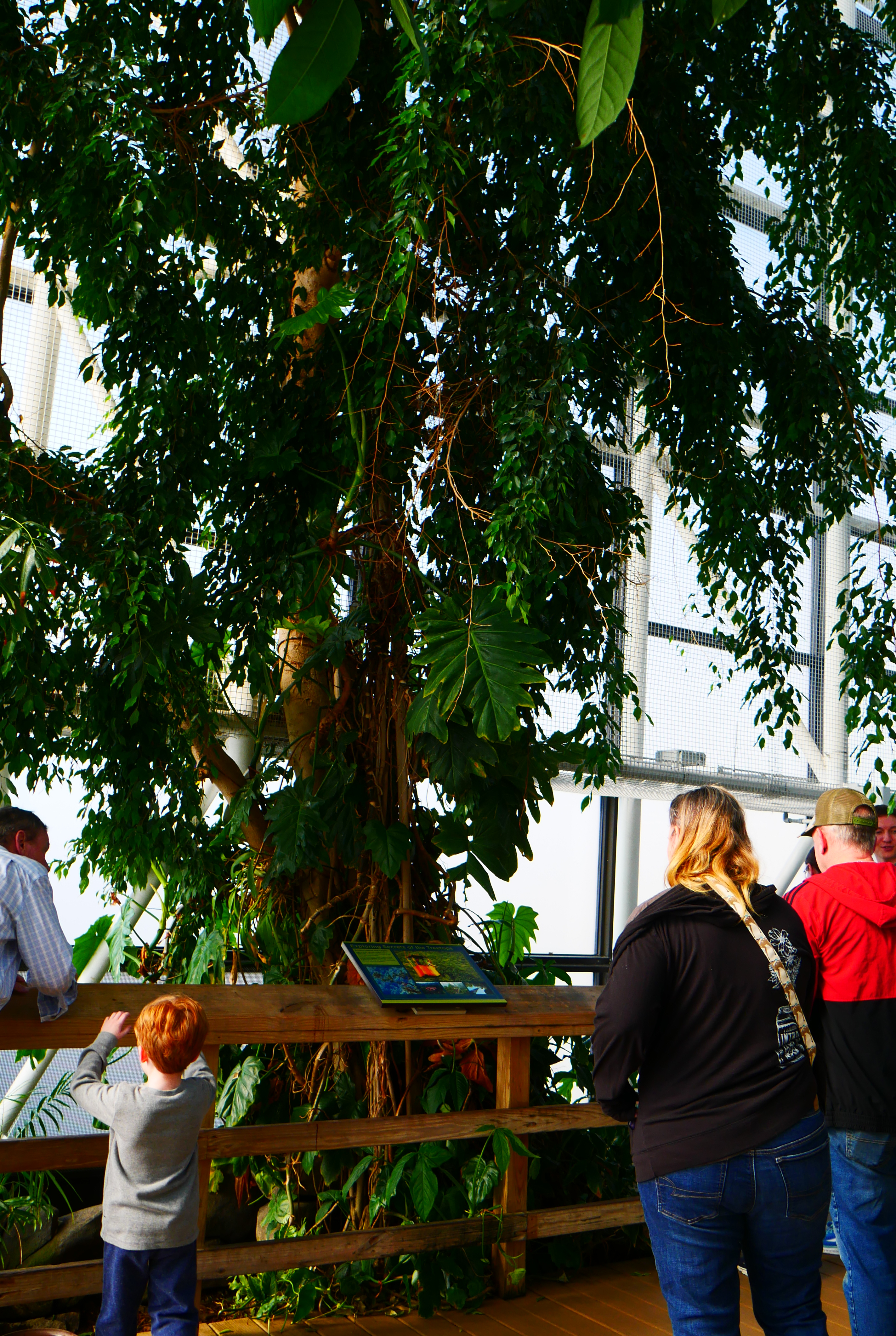
 Literally, the "crown" jewel of the National Aquarium is the taller of its two glass pyramid rooftop conservators.  The lower is dedicated to the Flora and Fauna of Australia, and the higher is a Central American Rain Forest.  It is not a place to rush through.  Again, as my father was oft to say, "Keep your eyes peeled back and you might just see something."

To get there, you take another escalator and this one is the most magical of all.  Like a black chute leading to an Emerald Kingdom.  But of course, you look back, and it's just an escalator.  Then look around again.  An Emerald Kingdom awaits your exploration!


Follow the path...

But do not put your hands in the tank!

Piranha and Black Neon Tetras

Just beyond, a tree house?  A deck in the canopy!  But first lets explore this level.

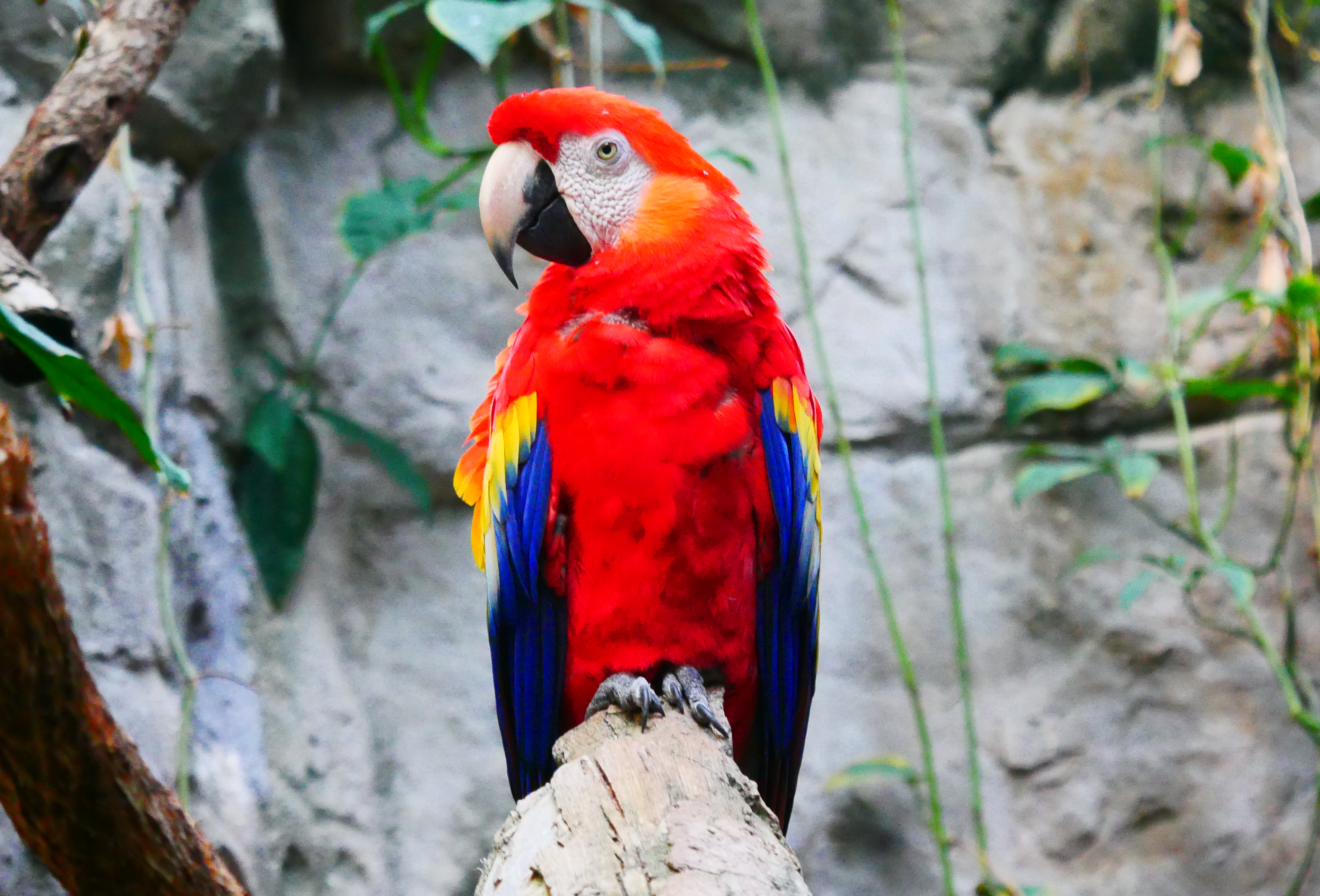
The perfect photo op, a Scarlet Macaw, Ara macao, before a Waterfall!  This bird is an accomplished actor who knows its role inside out!


Immediately a pair of Double Yellow-headed Amazon Parrots, Amazona oratrix, a species that is Endangered, and a pair possibly participating in a SSP (Species Survival Program)?

Looking up into the canopy, one of a little flock of Scarlet Ibis, Eudocimus ruber, looks back!

Time to find those stairs and climb up to the decks that offer views from the canopy!  Clearly, the main fauna attraction on this habitat is avian, but it's not exclusively birds.  The space is also home to a pair of Linne's Two-Toed Sloths, and a pair of Yellow-Toed Tortoises.

Once on the top deck, a docent alerts some of the visitors that at least one of the sloths is resting on the backside of an enormous fig tree off the edge of the deck.  She has not seen the other sloth.

Finding her, I wonder is this just one sloth?  What do two furry sloths entangled in an embrace even look like?  Right?  

After looking up, I chance to look down and spied this Yellow-Footed Tortoise, Chelonoidis denticulata,  looking up at me!  From here, it's all about the birds!  And patience.  And birds!


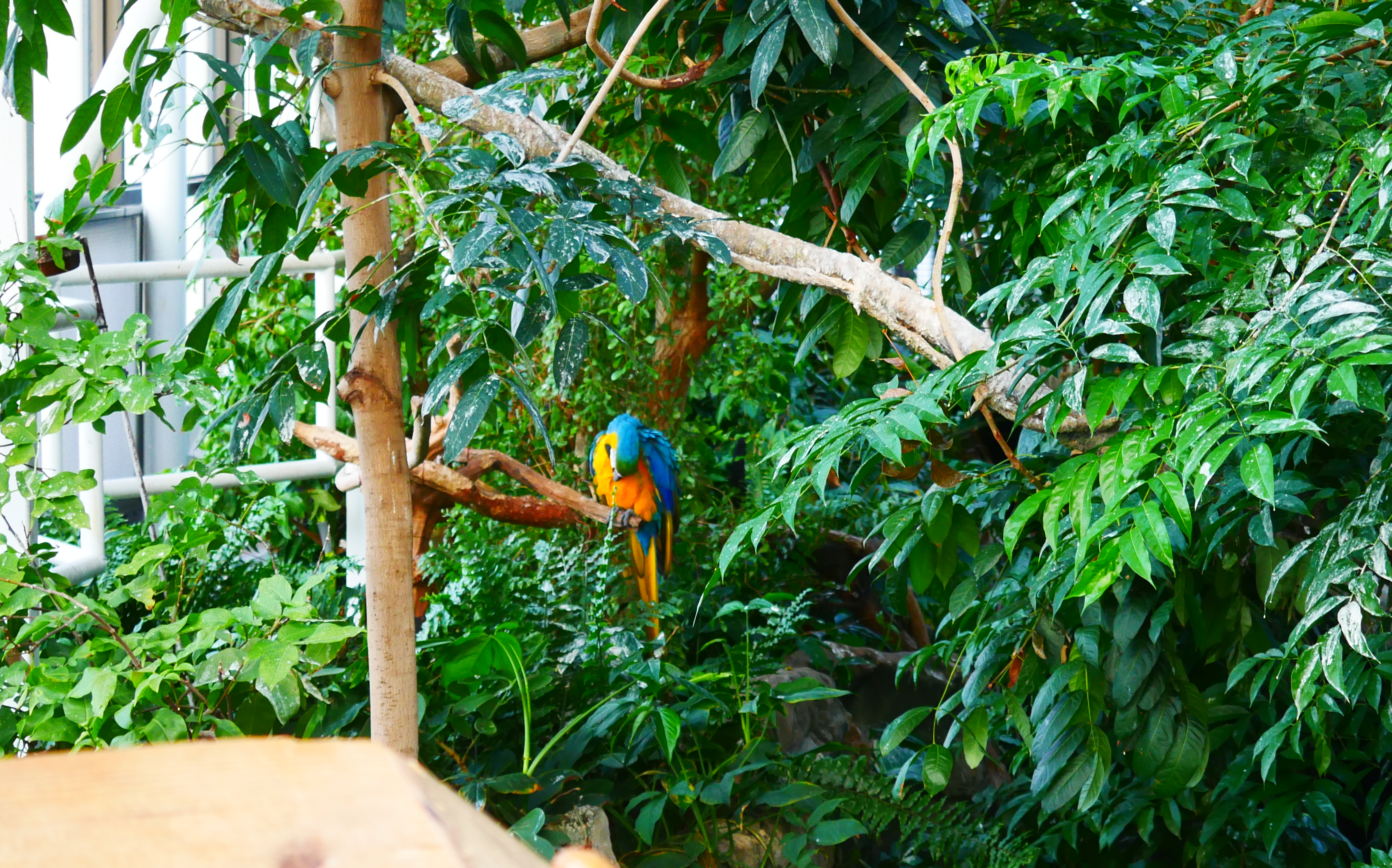
Blue & Yellow Macaw, Ara ararauna

The "headless" Preen-er!


Boat-billed Heron, Cochlearius cochlearius


I didn't get the identity of this wonder.

Silver-Beaked Tanager, Ramphocelus carbo


Yellow-Rumped Cacique, Cacicus cela


Turquoise Tanager, Tangara mexicana

National Aquarium: Amazon River Forest

 Okay, I have to start with this statement: This is my FAVORITE thing about the National Aquarium.  This series of long habitats flowing on to the another like the river itself (5-6 tanks?).  It's like snorkeling in the Amazon!--without the puppy-sized Tarantulas, Fire Ants, Poisonous Snakes and Frogs, Piranhas and Candiru.  Look that last one up and shudder at the thought!  The range and variety of fish, rays, turtles, just amazing.  And it proves what my father taught me as we would traverse the woods of northern Michigan, "You will see as much as you are willing to look for."  What's more, admittedly with my limited experience with aquariums, I've never seen anything quite like it anywhere else.

Feast and know, you will see as much as you are willing to look for!


Around the corner from the Amazon River Forest habitats and a really wonderful pair of habitats that are designed to look alike in their major features.  One, however, is submerged in water while its sibling is mostly dry.  The pair dramatizes the drastic difference in life in the Amazon Rain Forest between the Dry and Rainy Seasons.  A cycle that has occurred from time immemorial and is now threatened by the acceleration of climate change that my species has initiated and refuses to address...it's humbling and so, so sad.

Submersed and full of little Neon Tetras flashing the red and blue scales.

Now dry with mosses and new vegetation sprouting.

Can you see the little frogs?

Let's take a closer look: an orange Splashback Poison Dart Frog, Adelphobates galactonotus.

Don't forget to look up!  An Emerald Tree Boa, Corallus caninus, and a couple Giant Waxy Tree Frogs, Phyllomedusa bicolor.