By way of an overview, one of the least of these museum on the National Mall is the Freer Gallery of Art. It's also one of the oldest which might account for its location right next to the Smithsonian Castle. It holds both the collection and legacy of the little known industrialist, Charles Lang Freer (1854-1919). In his lifetime, Freer focused his collection of works of Asian art, (Japanese scroll and screen painting, Japanese religious icons, Korean Ceramics, Chinese works in various media) and a handful of artists representing the American Tonalist movement like Wilmer Dewing, Abbott Thayer and James McNeill Whistler. At the time of his death the curatorial staff of freed to expand the collection to include other regions of Asia and Islamic/Judaic Art in the collection. Additional the works of a handful of select 9th and early 20th century painters can be found in the museum like Winslow Homer, Childe Hassam and John Singer Sargent.
This one room exhibition is an introduction the art museum's namesake, Charles Lang Freer. He's one of those mythic self-made men of the 19th century that then turned their wealth into some act of public good. You know, Andrew Carnegie with his string of 2,800+ temple like Public Libraries, or Julius Rosenwald who used his fortune to build schools for African American children across the American south--35% of all such schools across 15 southern states were built using his money by 1932. Betcha didn't know that one, eh? But I digress.
Charles Lang Freer dropped out of school after 7th grade (according to his biography on Wikipedia)--which in 1867 was still quite an accomplishment--because his mother died and he needed to work. By virtue of skills in accounting and genial nature he came to the attention of the superintendent of a regional railroad line, ws hired as the companies paymaster, and parled his way into an eventual partnership in creating a Peninsular Railcar company in Detroit. By 1899, he not only led the company but orchestrated a merger with 12 other companies to create one of the largest corporation in America at the turn of the 20th century. Needless to say, he had the means to collect art. His focus was on American Tonalist painters and Asian art. One of his favorites was James McNeill Whistler.

The one room exhibit explores how is collection reflects his fundamental aesthetic temperament, a deeply held conviction that the power of art is in its ability to engage anyone on the emotional, visceral level. That knowledge regarding cultural context and/or artistic techniques was secondary to appreciation. We learn in the exhibit how he was encouraged by his friend and Japanese art scholar, Ernest Fenollosa, to believe in a "secret chord" that tied all of the works together. And most significantly regarding the Whistler Watercolor exhibition (and point of my visit) just how keynote to this unity were the works of James McNeill Whistler.
The room contains a selection of objects from the collection and a series of intimate images of Freer taken by the young photographer, Alvin Langdon Coburn. Freer had hired Coburn to make a photographic record of all the pieces in his collection, and only begrudgingly agreed to the photographs of himself.
Portrait of Charles Lang Freer, 1902-1903
James McNeill Whistler (1834-1903)
Writing Box, circa 1815
Japanese, Edo Period
(The blue pattern on the top half of the background is a reflection of the gallery's skylight ceiling)
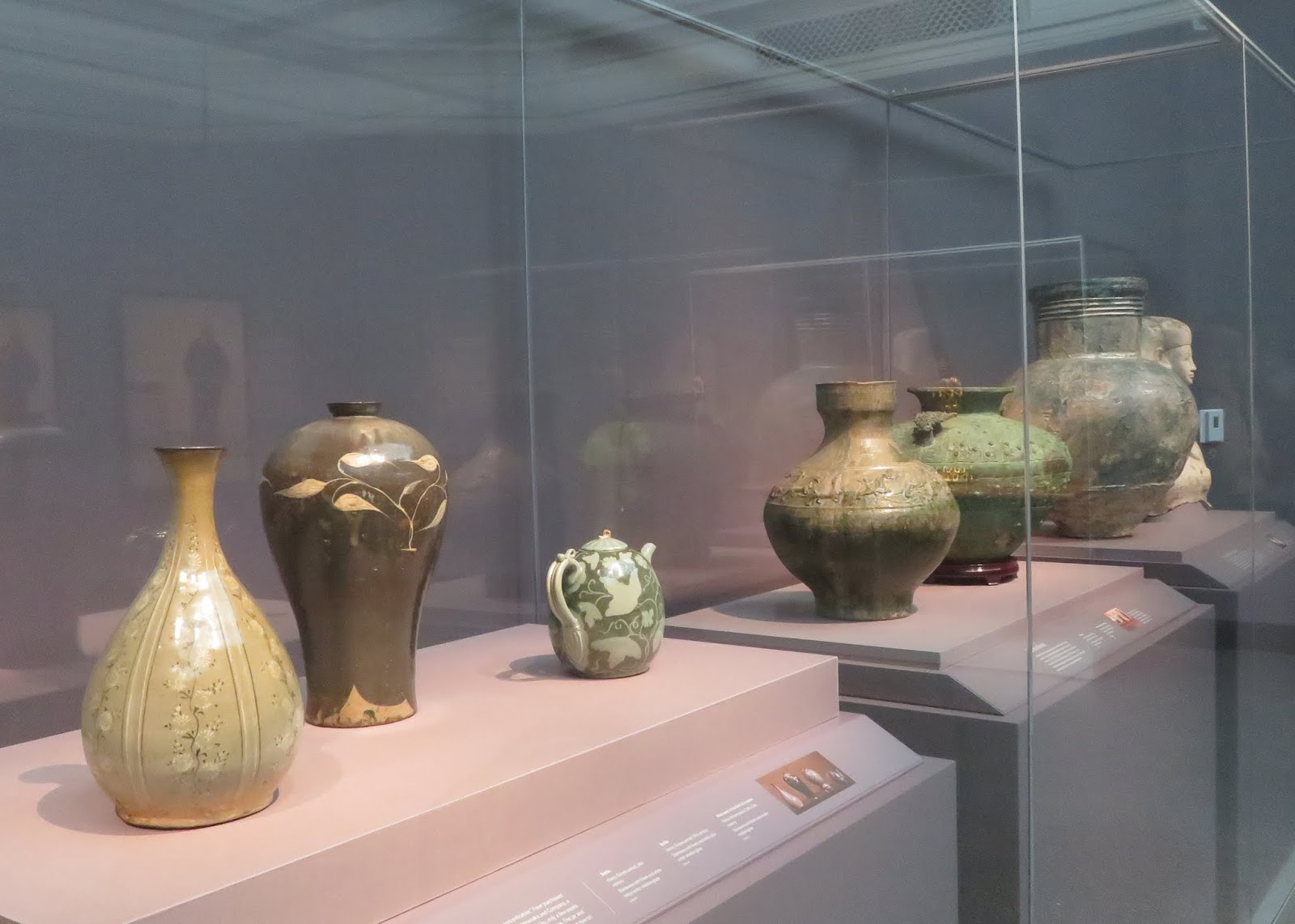
A collection of various ceramic vessels from the general collection.
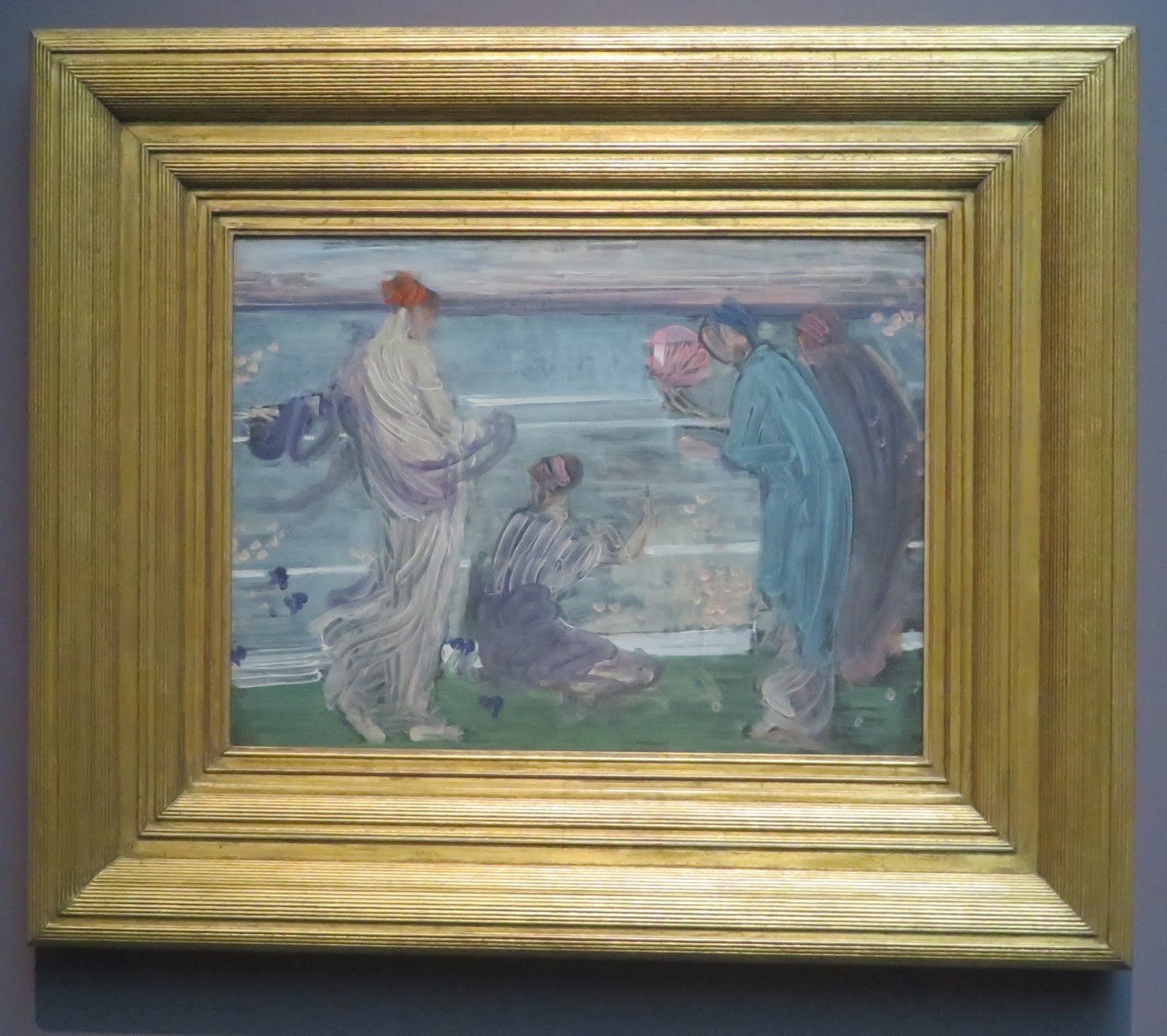
Variations in Blue and Green, circa 1868
James McNeill Whistler (1834-1903)
Alvin Langdon Coburn Photographs
 The new exhibit at the Freer Gallery of Art in Washington, DC features watercolors by James McNeill Whistler. They are by and large small works with delicately executed precision. Genius personified. Whistler demonstrates this genius in his exquisite control of a medium without controls. I went seeking inspiration. I was not disappointed.