Wednesday, March 27, 2024

Virginia Zoo: Okavango Delta

 Is the third major focus area of the Virginia Zoo in Norfolk.  It's home to the lion's share of their African Species.  Defined by naturalistic and generous spaces attenuated by three major holding buildings--two of which are hidden with landscaping and faux-rock formations, while the third looks like a large safari observation building.  Besides the larger, open habitats, a series of cave-like and smaller habitats line a faux rock gorge that rises and falls along the pathway behind the African Lion Habitat.  8 to 10 species of smaller mammals and reptiles can be found residing here.


LEGEND

A - Watusi Cattle
   - Hartmann's Mountain Zebra
B - Red River Hogs
C - Cheetah
D - Masai Giraffe
   - Southern Ground Hornbill
   - (previously Common Ostrich)
E - Yellow-backed Duiker
F - Eastern Mountain Bongo
   - Stanley Cranes
G - Southern White Rhinoceros
H - African Lion
I - Slender-Tailed Meerkat
  - Rock Hyrax
  - Radiated Tortoise
  - Fennec Fox
  - Crested Porcupine
  - Pancake Tortoise

Some selected photos from Monday's visit:
Rock Hyrax

African Lion 

Southern White Rhinoceros.  

Both of these Females were transferred to the Virginia zoo back in April of 2017 from the Singapore Zoo (an AZA foreign member).  They are Zina and Bora and both brought lines of DNA into the North American collective that made them more precious than gold.  Their arrival also heralded the transformation of this habitat from a home for African Elephants to one for Southern White Rhinoceros.  The remaining Elephants at the Virginia Zoo were sent to Zoo Miami to join their herd in a newly expanded and renovated habitat.

To give the SSP for Southern White Rhinoceros at the Virginia Zoo even greater prominence, Sibindi, a male born in South Africa with an equally unique genetic pattern was selected to be the bull.  In July of 2021, Zina gave birth to a healthy male calf named Mosi (here she is looking at Mosi who is in a separated habitat adjacent to hers.  At 32 months, Mosi is now weened and entering his adolescent years.

Meanwhile, this past November, lightning struck again and Zina gave birth to a healthy female, since christened, Letti.  On my visit, Letti was in the barn with Sibindi.  Safe to say, she's totes adorb!  But the photo-ops where not good.


Eastern Mountain Bongo - this is actually, Jax.  Jax is young male Bongo who's horns became infected last autumn, and in order to safe his life, the veterinary staff made the ultimate decision to remove his horns.  He has recovered well from the procedure and is expected to live a full and genetically productive (wink, wink) life.  Jax is the younger of two males in the Virginia Zoo herd of Eastern Mountain Bongos, a Critically endangered species of arboreal antelope.  
Red River Hogs

Watusi Cattle!--nothing like the dance craze of the 1960's

Hartmann's Mountain Zebra--the zoo is home to four.


Tuesday, March 26, 2024

Virginia Zoo: Trail of the Tiger

 One of the things that I really love about a well conceived zoo is the integration of multiple habitats with natural features into one cohesive experience.  "The Maryland Wilderness" at my beloved Maryland Zoo in Baltimore, the "Tropical Rain Forest" habitats at the Woodland Park Zoo in Seattle, the "Kingdoms of Asia" at the Fresno Chaffee Zoo in California, and "The Water's Edge" at the Pittsburgh Zoo in Pennsylvania are a few great examples.  When integrations occur around regional themes there is not only the opportunity by the imperative to present an integrated story of history, culture and the environment.  

One of the finest examples of this is the Trail of the Tiger at the Virginia Zoo in Norfolk.  Generous habitats with state-of-the-art design and holding facilities offer an integrated experience with up to 17 unique species.


LEGEND

A - Siamang 
B - Bornean Orangutan
C - Clouded Leopard (coming soon, replacing the former resident Asian Sun Bear)
D - Small Bird Aviary
      - Chinese Hwamei
      - Laughing Kookaburra
      - Tawny Frogmouth
      - White-crested Laughingthrush
E - Sarus Cranes
F - Red Panda
G - Rhinoceros Hornbill
H - Binturong
I - Southern Carrowary
J - Asian Moon Bear
K - Malayan Tapir
L - White-cheeked Gibbon
   - Asian Small-clawed Otter
M - Malayan Tiger

Now, a few pics from my Monday visit.  It was chilly, ergo some of the more tropical of the animals were in the holding spaces, including the troop of Siamang's, a family of 5 I believe with a new born just this past January.

The zoo is home to two pairs of Bornean Orangutans.  One remained inside nestled in their hammocks, while this couple was soaking up some warmth from the sun and foraging. Lavendar Ground Ivy (Lamium amplexicaule) 


White-crested Laughingthrush

Laughing Kookaburra

Asian Moon Bear

Malayan Tiger

Monday, March 25, 2024

Virginia Zoo: Reptiles of the World and Friends

 I love a good herpetarium, and they are not that common at most zoos.  Often Reptiles and Amphibians are scattered in and among other collections of animals in say a "Tropics House."  Sometimes this works, I would say that the Denver Zoo's arrangement is particularly successful, while the Reptiles included in the expanded Jaguar/Tropical Aviary habitat at the Woodland Park Zoo in Seattle tends to lose the snakes in the rest of the spectacle.   Some Zoos try to create a dedicated building, which often feels like an afterthought, a box to check off in broadening the range of species.  The smaller the zoo, the less successful the attempt.  So where are some great Herpetariums?  The Smithsonian National zoo has a pair in the Reptile House and the Amazonia Tropical Forest building.  The Philadelphia Zoo has arguably the first modern Herpetarium and after a major overhaul a few years back one of the finest.  And then there is the Virginia Zoo in Norfolk.

About 5 years ago now, if memory serves me, it opened an expanded and ambitious new Herpetarium called "Reptiles of the World and their Friends".  Nestled a wee bit off the beaten path between the Beastro Cafe and the Children's Petting Zoo, it's honestly possible to visit the zoo and completely miss it, or think it no big deal.  However, you would have missed one of the best things about the Virginia Zoo and one of the best Herpetariums in the nation.

The design in organic and "snakes" around from entrance to exit presenting the visitor with dozens of habitats, medium, large and extra large in size.  There are two working labs where species survival is front and center with arches of glass walls to peek inside and discover what goes on in a poison dart frog fertility lab, or what do infant boa constrictors eat?  Not for the faint of heart.  Around one turn is a series of large aquariums featuring, exotic newts, water snakes, and even seahorses.  The largest feature is a huge pool full of enormous cichlids and koi and a pair of very content Siamese Crocodiles.  

The last thing you see is a series of 4 habitats, large vertical spaces arranged in a reverse bay window.  Each is home to a different species of Tree Monitor Lizard--all with Color names: Blue, Black, Green and Yellow.  It creates an amazing, real-time opportunity to compare the stunning and unique coloration of each to the other.

On the way out is large aviary which was originally designed to be shared by small primates, titi monkeys, a three-toed sloth, and some copacetic bird species.  The very first time I visited, the space was still under construction.  The second time, it was homes to tropical plants, but animals were yet added.  Today, I found the plants and a couple of species of birds, Nicobar Dove and a species of Myna.  No primates.  I get the sense that in leaving some areas incomplete, the zoo may have bitten off more than it can chew when it set about designing the entire complex.  But if one lacking aviary is the only issue, I am so grateful that they went ahead with the rest.  And the fact that they have intentionally made space for animals from all corners of the world and in many cases with conservation concerns is really what makes this place unique.


The Building's Exterior


King Cobra (Ophiophagus hannah) with neck flaps completely retracted
Native to: Bangladesh, Bhutan, Brunei, Cambodia, China, East Timor, India, Indonesia, Laos, Malaysia, Myanmar, Philippines, Sikkim, Singapore, Thailand and Vietnam.
Conservation Status: Vulnerable

Fiji Banded Iguana (Brachyolophus fasciatus)
Native to: Fiji
Conservation Status: Endangered

Smallwood's Anole (Anolis smallwoodi)
Native to: Cuba
Conservation Status: Near Threatened

Frilled Dragon (Chlamydosaurus kingii)
Native to: Australia
Conservation Status: Least Concerned

Henkel's Leaf-tailed Gecko (Uroplatus henkeli)
Native to: Madagascar
Conservation Status: Vulnerable

Aruba Island Rattlesnake (Crotalus durissus unicolor)
Native to: Aruba (Dutch Caribbean Antilles)
Conservation Status: Least Concerned

Mangrove Snake (Boiga dendrophla)
Native to: Brunei, Cambodia, Indonesia, Malaysia, Myanmar, Philippines, Singapore, Thailand, and Vietnam
Conservation Status: Not Evaluated

Cantil Viper (Agkistrodon bilineatus)
Native to: El Salvador, Guatemala, Honduras and Mexico
Conservation Status: Near Threatened

Cottonmouth [Water Moccasin] (Agkistrodon piscivorus)
Native To: United States
Conservation Status: Least Concerned

Sailfin Dragon (Hydrosaurus pustulatus)
Native to: Philippines
Conservation Status: Least Concerned

Iranian Newt (Neurergus Kaiseri)
Native to: Iran
Conservation Status: Vulnerable

Egyptian Tortoise (Testudo kleinmanni)
Native to: Egypt and Libya
Conservation Status: Critically Endangered

Blue Tree Monitor (Varanus macraei)
Native to: Indonesia
Conservation Status: Endangered

Yellow Tree Monitor (Varanus reisingeri)
Native to: Indonesia
Conservation Status: Not Evaluated

Sunday, March 24, 2024

Dinner: Beef Stew over Pappardelle Pasta!


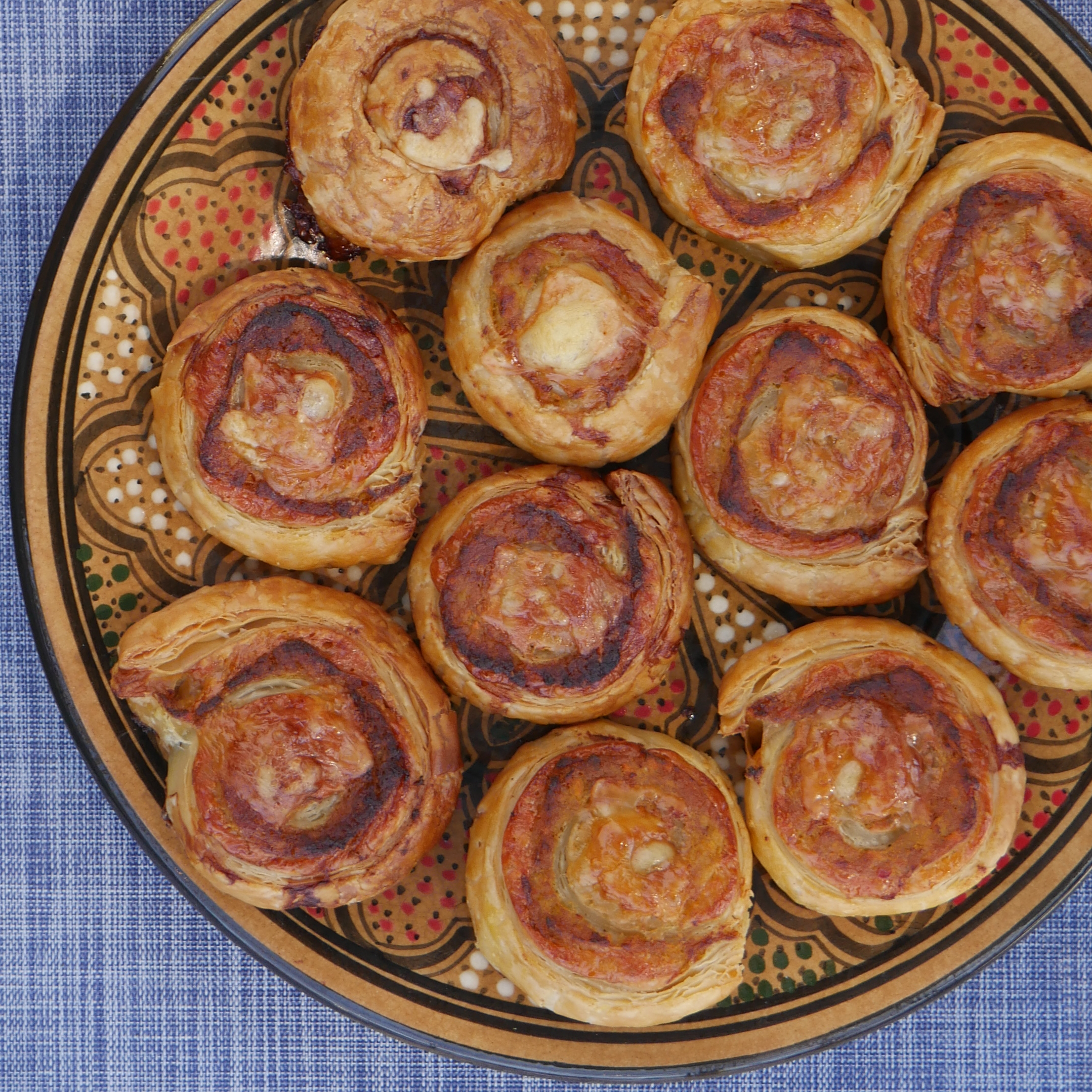
Lunch: Deviled Ham Salad Pinwheels


Deviled Ham Salad

1 lb         Deli Black Forest Ham thin sliced
1 med     Carrot, chopped
4 large     Scallions bulbs and fresh greens
1/2          Red Bell Pepper
1 Juicy     Stalk Celery

All food processed to a paste.

Salt and pepper to taste

Pinwheels

Layer on Puff Pastry with thin sliced Swiss Cheese and Deviled Ham Salad

Roll into log and slice and into pinwheels

Back @ 450F for about 40 minutes.  Until risen, flaky, and golden brown.

Tuesday, March 12, 2024

The Federal Courts: Southern Ohio, part 1

 Of the two Federal Court Districts that make up Ohio, the Southern District is the smaller in terms of number of seated justices with 8 compared to the Northern District's 11.  While the work of the Northern District is divided between 4 courthouses (5 if you include the Appellate), the work of the Southern District is confined to three Courthouses: Cincinnati, Dayton and Columbus--with Columbus being one of the largest concentration of seats in the Sixth Circuit, second only to Detroit.  The second longest serving Justice in the Sixth Circuit is also seated in the Southern Ohio District: Judge Walter Herbert Rice was born in 1937 (86 yo) and was appointed to the bench in 1980 by President Jimmy Carter.  He has served for over 43 years.  (I'm in my 40th year as a public school teacher, but I didn't start with I was 43!)

Prior to the election of Trump-acolyte, J. D. Vance to the Senate from Ohio in 2022, President Biden was able to fill the 10th seat.  Seats 1 and 4 have been retired over the years, and seats 9 and 10 were subsequently added.  The demographics of the seated judges looks like this:
  • 7 Men to 1 Woman
  • 6 White to 2 Black
  • 5 Republican appointees to 3 Democratic
  • The 8 full-time Justices are supported by 8 Senior Status part-time Justices.

Monday, March 11, 2024

The Federal Courts: Northern Ohio, part 2

 I love making this graph.  It illustrates the seats in the Federal District Court of Northern Ohio beginning in 1979.  The years are colored to represent different presidents and the judges they appointed share the same color.  The length of the vertical bar represents the number of years the judge served in that seat.  Cutting across any year left to right will show you which judges were serving together during that year (and if there were openings, or even if a seat that exists today, existed then.)  Seats are always subject to creation and retirement by the Congress.  However, whenever a seat is created, it cannot be filled by the sitting President.  The seat must remain empty until after the next election when the winner--whomever that may be, can nominate a candidate to the new seat.

I chose to start this graphic at the end of the Carter Administration precisely because President Ronald Reagan was the first president in my lifetime be seen as Judicial activist.  Not the first President to attempt to pack the Third Branch of government to their ideological advantage.  Certainly President Franklin Delano Roosevelt wins that honor.  Next in line would be the geriatric duo of Trump/McConnell.  And it's no secret that Biden has promised to "restore balance to the Federal Judiciary".  

Interpreting the Graphic

In 1979, Jimmy Carter was President.  There were 8 seats in the District of Northern Ohio.  All were filled by his predecessors.  Both seats 1 and 2 had already been retired.  Ergo seats 3 through 10.  These judges were appointed by the following presidents:
  • Lyndon B. Johnson - seats 3, 4, and 9
  • Richard M. Nixon - seats 5, 6, and 10
  • John F. Kennedy - seat 7
  • Gerald R. Ford - seat 8
In the final year of his presidency, Jimmy Carter got to appoint 2 new judges, who's seats had been authorized by Congress during Gerald R. Ford's presidency.  Carter used the opportunity to appoint the first female judge, Ann Aldrich, and the first Black judge, George Washington White. Congress authorized an eleventh seat during President Reagan's first term, which he filled at the beginning of his second, and used this opportunity to appoint the courts second female judge, Alice M. Batchelder.  The new seat brought the court to 11 seats, and Reagan appointees held 6 of them (a majority) for a short time between 1986 and 1989. During Reagan's second term a 12th seat was authorized and first filled by his predecessor, George H. W. Bush.  Bush-the-Elder appointed the first Hispanic Judge to the court, Paul Ramon Matia.

But Reagan's second term was marked by divided government with Democrats holding the reigns in the Senate, as well as, both Senators from the Buck-eye state members of the Democratic Party.  A combination that led to no blue slips and no more judges appointed by President Reagan.

Ergo, when newly elected Democratic President, Bill Clinton, entered office, he found himself with 5 open seats out of the total of 11.  He wasted no time filling those seats, and expanding representation.  In the following 8 years, President Clinton appointed a total of 10 Judges to this District Court.  3 of whom were white women, and one a Black man to further expand the diversity that did exist in 1979.  The graph clearly indicates the width and length of Clinton appointee influence.  

Post President Clinton, Presidents have had significant, yet not overwhelming opportunities to assert their Judicial philosophy into this court.  President George W. Bush got to name 4 judges, President Obama 2 judges, President Trump 3 judges and President Biden 3 judges.  Of these 12 Justices:
  • 3 White Women
  • 1 Black Woman
  • 1 Black Man
  • 1 Hispanic Man
And all three of President Biden's appointees are among these six.  In the history of this court from it's inception in 1855 with the appoint of Hiram V. Willson by President Franklin Pierce, there have been a total of 61 Federal District Judges.  Of those 61 judges over the course of 169 years, there have been a total of:
  • 49 White Men
  • 6 White Women
  • 3 Black Men
  • 2 Hispanic Men
  • 1 Black Woman


For the first 125 year, there were ONLY white men!  President Biden has replaced 30% of the current sitting Justices, and he is the first President to appoint ALL minority candidates.

Credit where Credit is due.