Sunday, August 20, 2023

Wilmington, Delaware: The Delaware Art Museum, part 3

 The next gallery to visit is gallery 7: The Modern Metropolis.  Here the Delaware Art Museum pays homage to its favorite artist, John Sloan (1871 - 1951).  A member of the turn of the 20th century collective known as the Ashcan School known for their propensity to paint urban images of common folk and industrial sites, the gallery is roughly divided into three sections.  Along the right wall when entering you'll works by other members of the Ashcan School and contemporaries.

On the left wall, are a series of works by John Sloan, many of which are nocturnes.  And on the opposite wall are works on paper, drawings with social and political themes by Sloan who also worked as a political cartoonist, and contemporaries.  Here there is also a desk with pencils and squares of paper inviting visitors to make little drawings of their own and then place them in racks for others to enjoy.  This type of guest engagement can be found in other places in the museum.  It's one of the aspects of the DAM that I really love.  It's an intimacy that befits a museum of this size.

Works by other members of the Ashcan School Like George Luks, Everett Shinn, and William Glackens.

Works by John Sloan (1871 - 1951)

"Green's Cats," 1900
John Sloan (1871 - 1951)

"Wet Night Washington Square," 1928
John Sloan (1871 - 1951)

Works on paper by Sloan and others.

"Girls Sitting in Union Square Fountain," 1936
Isabel Bishop (1902 - 1988)

"John Sloan's Lecture," 1919
Peggy Bacon (1895 - 1987)

Visitor Engagement, guest drawings.


Wilmington, Delaware; The Delaware Art Museum, part 2

Lets continue our visit on the other side of the grand foyer in Galleries 4 to 6 titled "Picturing America."  Here are works from some of the great  and iconic masters of 19th and early 20th Century American Artists.  Artists like Raphaelle and Rembrandt Peale (members of the greatest artistic dynasty ever in the United States), Benjamin West, John James Audubon, Severin Roesen, George Inness, William Merrit Chase, et. al.  

While galleries 5 and 6 feature a wide variety of motifs, gallery 4 is exclusively portraits.  And here the museum take the PC bull by the horns announcing up front that they have works featuring subjects that were both abolitionists and enslavers.  The identify both and leave it up to the guest to reconcile the differences between who is depicted as a work of art and as a citizen of their era.  

Now a few of the works.

GALLERY FOUR


"Bishop Levy Scott," 1843
Charles Cohill (1812 - 1860)

"Absolom Jones," 1810
Raphaelle Peale (1774 - 1825)

I do not like the fact that I could not take a straight on photo of this work.  It's protected by a piece of glass that reflects the lights and created a shadow image of me holding my camera.  This was the best I could do.

"George Washington," circa 1825 - 1830
Rembrandt Peale (1778 - 1860)
&
"Ann Inglis," circa 1757
Benjamin West (1738 - 1820)

GALLERY FIVE

"White-headed Eagle," circa 1828
John James Audubon (1785 - 1851)

"South American Landscape," 1873
Frederic Edwin Church (1826 - 1900)

"Thistle with Butterfly," circa 1888
Charles Ethan Porter (1847 - 1923)

"Landscape," 1887
Henry Lea Nantall (1829 - 1885)

Yes, Henry is the father of Josephine, the namesake of the fountain in Brandywine Park.

GALLERY SIX


"Early Autumn, Montclair," 1891
George Inness (1825 - 1894)

"On the Nile, Gebel Shekh Hereedee," 1872
Sanford Robinson Gifford (1823 - 1880)

"Spring," 1874
George Henry Boughton (1833 - 1905)


Wilmington, DE: The Delaware Art Museum, part 1


Anyone who knows me also knows that no trip to Wilmington is complete without a stop at one of the finest regional Museums in the United States.  The Delaware Art Museum may not huge, but it's grand in its own ways.  Recently, the galleries on the ground floor have been reinstalled and revamped.  Works from their areas of strength in their collection continue to be featured: The Pre-Raphaelites, American Illustration, and the artist John Sloan, along with others from American 19th and 20th century artists and a growing visionary collection of contemporary art.


We will begin our visit with Galleries 1, 2, & 3: Radical Beauty (British Pre-Raphaelites)

GALLERY ONE


"The Waterfall," 1853
John Everett Millais (1829 -1896)

"The Towers of Fribourg, Switzerland," 1856
John Ruskin (1819 - 1900)

detail: I thought the buildings looked like they have faces. 

"Crooksbury," 1884
William Henry Millais (1828 - 1899)

"Academic Study of a Seated Male Nude," 1868
William Wise (1847 - 1889)

GALLERY TWO


"Botticelli's Studio: The First Visit of Simonetta Presented by Giuliano and Lorenzo de' Medici," 1922
Eleanor Fotescue Brickdale (1872 - 1945)


"The Octopus (Death of a Mermaid)," 1929
Ernestine Evans Mills (1871 - 1959)

"Pendant: The Song," circa 1904
Phoebe Anna Traquair (1852 - 1936)

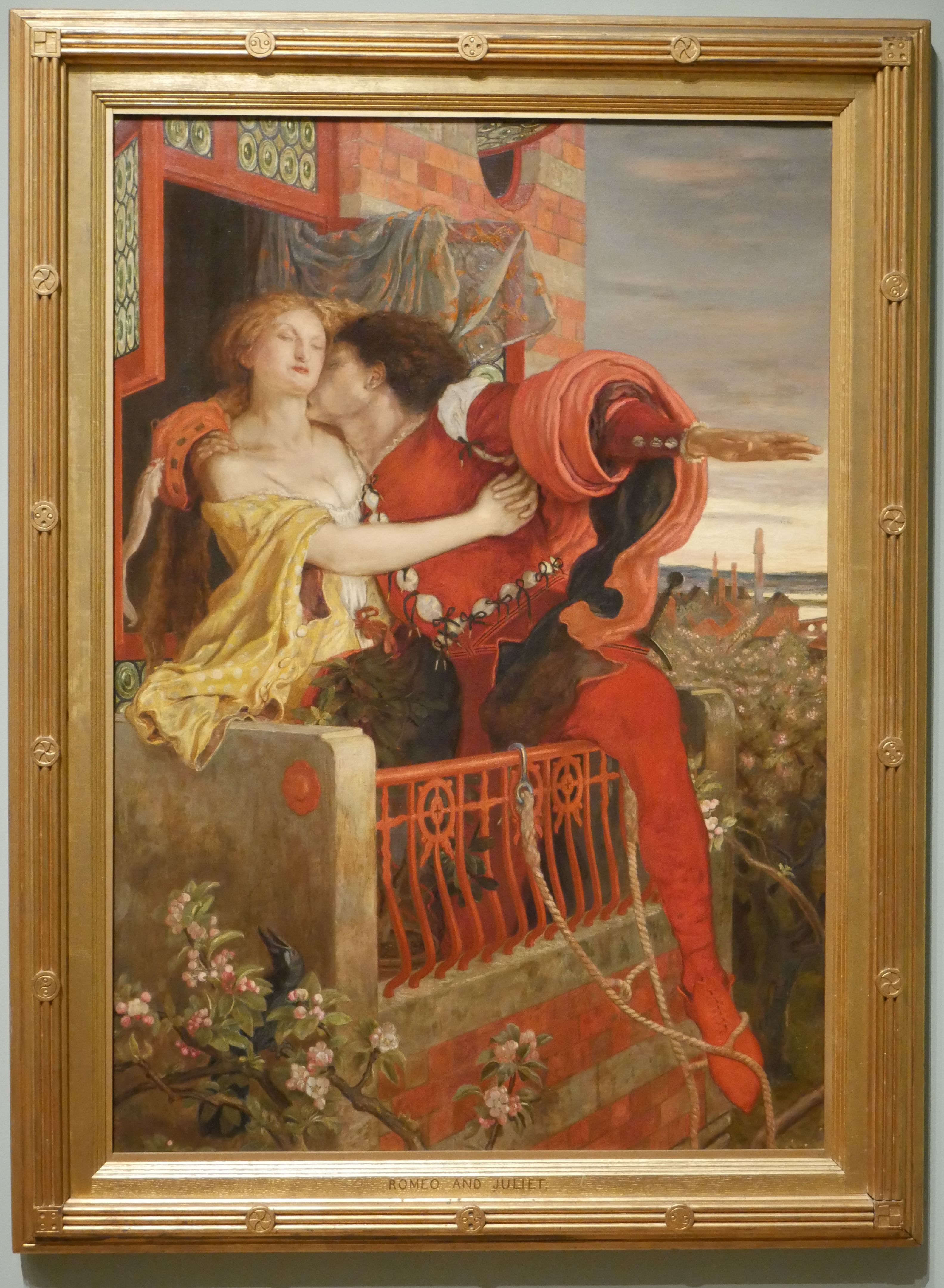
"Romeo and Juliet," 1869 - 1870
Ford Madox Brown (1821 - 1893)

GALLERY THREE


"Parlor Cabinet," circa 1871
Bruce Talbert (1838 - 1881)

Detail: Love the inlay work


"The Green Butterfly," circa 1879 - 1881
Albert Joseph Moore (1841 - 1893)

The presentation ends with an explanation as to how the Delaware Art Museum first became a foremost collector of Pre-Raphaelite works of art.


Wilmington, Delaware: Jasper Crane Rose Garden

 The final stop in the Brandywine Park of Wilmington, Delaware is the Jasper Crane Rose Garden.  Established in 1933 a year after the completion of the nearby Josephine Fountain, it is named after Jasper E. Crane who was an executive with DuPont Chemical Company.  Mr. Crane made an initial donation of 670 rose bushes representing some 58 varieties.  At it's peak there were over 1,000 bushes from over 100 varieties.  Like many things, the garden went into decline.  In the 1990's, the process of restoring it and refurbishing its collection began.  Today, there are over 500 bushes recreating the splendor of it's glory days.  Honestly, I don't even know how you could reasonably plant 1,000 rose bushes in the space provided.  When I first arrived members of a dedicated group of volunteers was pruning and removing fallen petals.  I waited to visit until the end of my stay in the park so they would have time to complete their work.

The Park is bisected by I-95 the preeminent east coast interstate highway.  Fortunately, it is high above, a pity the travelers have no idea what beauty lies below in its shadow.

A bronze plaque at the entrance