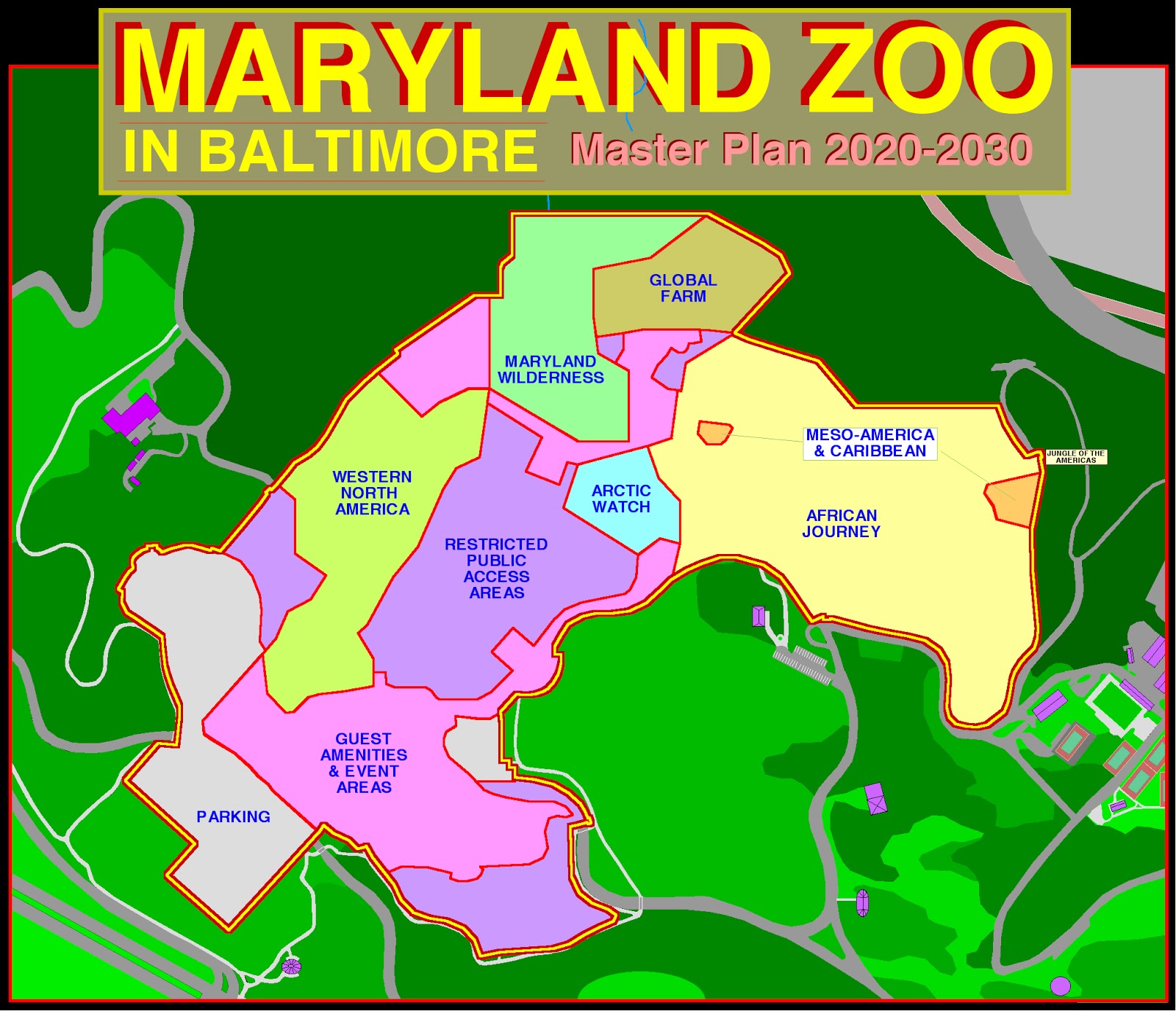
 Rather than impost habitat for more larger mammals, my plan seeks to capitalize on small creatures. The consolidation of the majority of Reptiles and Amphibians into one state-of-the art Herpetarium, and the creation of a Small Mammal "Lodge", along with a huge expansion of the Maryland Cave habitat to include five additional species of bats represent the Trifecta of my design. There are also a handful of other upgrades and changes to create a rich and varies experience for guests, as well as, more options that are visitor friendly during times of inclement weather.
The managing in a natural state the little run that creates an ever deepening rift in the middle of the Maryland wilderness will create a series of habitat experiences from the main entrance along the north-south axis of the area. The current seasonal bog with its winding elevated boardwalk remains unchanged. In an area below the March Aviary an arcing stone dam creates a shallow pond to provide a natural year around habitat for turtles and other creatures that call the zoo home by chance. Beyond this and below the suspension bridge is the only new larger mammal habitat, a home for beavers. This habitat connects to the foundation of the new Small Mammal Lodge to provide the Beavers with off exhibit living space.
Other changes include an expansion of the current March Aviary to create a cattail pond and addition of upgraded off viewing enclosures for some of the species like our vultures. The creation of new circular plaza on the north end of the pathway to better honor a memorial to a former employee who was tragically killed in the beginning of her career. Finally, the large and hugely popular giant tree slide will be transformed from a satellite herpetarium to an exhibit of native Maryland songbirds. With the heavy and boisterous traffic the tree slide generates, removing live animals in favor of taxidermied specimens that offer a unique educational experience is a win-win. The new displays will also feature opportunities to listen to the bird's actually "songs".


