Showing posts with label Akron Zoo. Show all posts

Sunday, July 13, 2025

Akron Zoo: Wrapping the Visit Up

 As certain as I am that you've enjoyed your visit to the Akron Zoo with me, it's time to bring it to a close.  Okay, we're close to 30 minutes from closing and I have 4 areas yet to visit on a hot late afternoon.  The Wild Asia zone dumps you out at a plaza dubbed Wild Prairie.  It's home to a little interactive farm area with sheep and goats, a "Western Town" set up mostly as a playground for younger children, and there are a couple of species of owls.  Without a map, I follow what appears to be the main pathway and come up on the Lerner Family Zoo Gardens--lots of flowers...keep moving!

Rounding a bend in what is a sort of hairpin turn on the way to the top of the hill, I am greeted by signage indicating that I have arrived at the Pride of Africa area.  There are buildings with African art motifs, a couple of tricked out safari ready Land Rovers.  To my right are a couple of habitats that are empty of animals.  I learn later that I might have seen Speke's Gazelle if they had been out and about and or White Storks.

At the far end past a couple more little buildings is a habitat with lions.  The male is sleeping pancake flat into the cool grass in the shade up next to the entrance/exit to the interior holding space.  Two beautiful females are hanging out on a rock formation in the center of the habitat.  I learn from a volunteer docent that the zoo is actually home to 5 lions: two-males and three-females.  One couple constitute the "older" pride, and the three available today are the "younger" pride.  The two prides take turns sharing the public facing habitat and a smaller private habitat on the backside of the holding building.  These lions are 10-year-old Donovan the male, and 11-year-old sisters Msinga and Kataba.  

I was unable to make it to the Grizzly Ridge area which is located below the Pride of Africa between it and the Wild Prairie, but on a dedicated path that loops.  This was partly due to the fact that without a map, I wasn't sure how to get to it, but also I'd just overheard a mother consoling her daughter because none of the bears were out.  Descending toward the entrance/exit I did take a different pathway that took me past the zoo's flock of Chilean Flamingos.  A rather impressive flock with 18 to 20 birds, which is a number sufficient to encourage breading potentially.

In the end, for it's size, this littler zoo has a lot to offer.  I was very pleased with my visit.

The upper end of the series of building in the Pride of Africa area.  The African Lion habitat has a pair of large glass windows for optimal viewing in the far building straight ahead behind the guests.

AFRICAN LION
Panthera leo


The male of the younger Pride, Donovan.

CHILEAN FLAMINGO
Phoenicopterus chilensis

Akron Zoo: Wild Asia

 At this point I realized that I only about an hour left and I was just halfway up the hill with about half of the zoo left to see!  Holy Appalachian Hellbender, Batman!   Okay, do what you can do, and don't short change the things you can do.  Also, the areas that are left to explore have far fewer habitats.

With that moment of anxiety quelled, I headed into the Wild Asia section.  And unlike past zoos, the Amur Tigers were out.  They had two large and geographically challenging habitats in the sense of natural flora, rock formations and climbing opportunities.  I did not see the Red Panda, but the final habitat was mind-blowing from the perspective of its inhabitants--a family of White-cheeked Gibbons.  The concoction consisted of a multi-storied interior designed to look like a Thai lodge from the outside attached to a very specious exterior habitat that abutted the building and towered up the ridge line to give multiple viewing from various heights.  The abundance of space was apparently enough to the Gibbons' liking to encourage them to produce off-spring, and the arrival of a little one earlier this Spring.

SUMATRAN TIGER
Panthera tigris sumatrae


The White-cheeked Gibbon complex from the upper exterior observation deck.

The Architect's concept when it was being designed from a different angle.

WHITE-CHEEKED GIBBON
Nomascus leucogenys

The adult females, Parker.  Tucked in with her is her seven-day-old infant.  


Akron Zoo:

 At this point in my visit, I decided I needed to eat something.  I often plan to eat at zoos but then continue to explore until I'm left with just enough time for a pretzel!  This time I went to the Komodo Kingdom Education Center and Cafe.  First, the most honestly amazing BLT Sandwich with fries at the cafe.  Then a tour of the menagerie of oddities and delights that are part of the Education Center.

Komodo Kingdom Education Center and Cafe


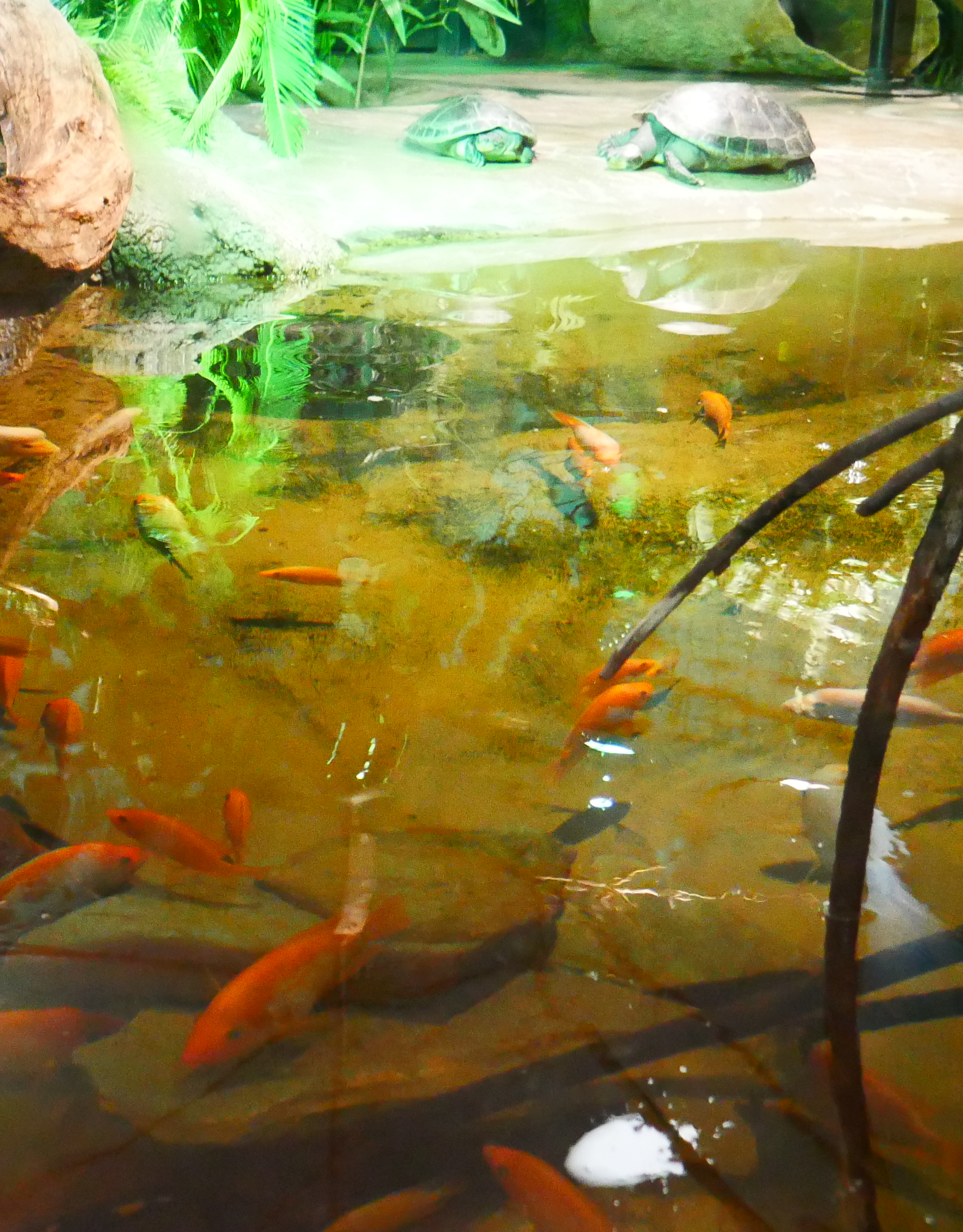
YELLOW-SPOTTED AMAZON RIVER TURTLE
Podocnemis unifilis

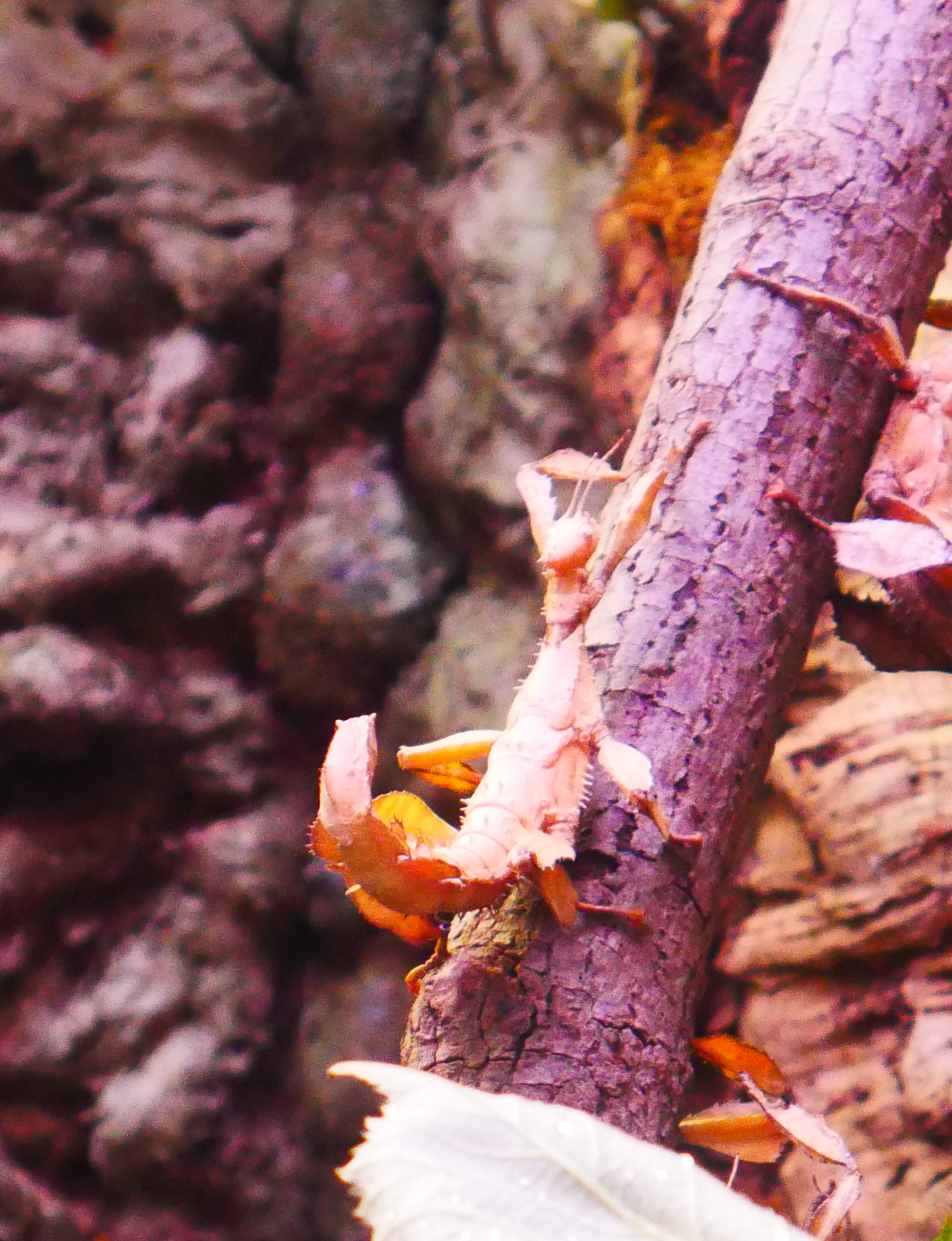
GIANT PRICKLY STICK INSECT
Extatosoma tiaratum

CLOWNFISH
Amphiprion ocellaris


BARON'S RACER
Philodryas baroni

Saturday, July 12, 2025

Akron Zoo: Legends of the Wild, part 2

 The Legends of the Wild introductory section of the Akron Zoo continues with amazing design and many species to explore.  We leave the Madagascar hut, and discover that we are in the Andes!  A multilevel series of structures with amazing detailing lead us from Alpaca to Andean Condors to Jaguars, to Patagonian Cavy, Bats and Poison Dart Frogs!  As fate would have it, the Jaguar's habitat is sometimes inhabited by a pair of Emperor Geese which provides olfactory stimulus for the Jaguar as well as a break from public scrutiny.  Again, a best practice of any good zoo.  
What amazing design!  A shelter on a ridge in the Andes of Peru?  Can you see the Alpaca?

ALPACA
Lama pacos

Viewing windows into the Andean Condor Habitat.  Upon closer look, it was mid-afternoon snack time for the pair of Condors.  This appeared to be a younger pair than the ones I'm used to seeing at the Brandywine Zoo in Wilmington, DE

ANDEAN CONDOR
Vultur gryphus

Windows into the Jaguar habitat--though "no en casa" today.

EMPEROR GEESE
Anser canagicus

Another chamber in the "Temple" complex?

Carefully decorated interior with viewing windows to Patagonian Cavy

PATAGONIAN CAVY
Dolichotus patagonum


RODRIGUES FRUIT BAT
Pteropus rodricensis


Aquarium habitats in the Bat room with various species of Poison Dart Frogs including Green & Black, Bumblebee, and Azure.

AZURE PD FROG
Dendrobates tinctorius azureus

The last plaza in this area of the zoo is home to a pair of Himalayan species habitats: the Snow Leopard and the White-naped Crane.  The Snow Leopard had discovered how to get above the lattice in order to observe songbirds, etc.  She was there, but not in a way that taking a photo made any sense.

WHITE-NAPED CRANE
Antigone vipio


Akron Zoo: Legends of the Wild, part 1


 The Akron Zoo is one of the smaller zoos that I have long been curious about.  However, it isn't all that small.  It sits within a public park of 77 acres and takes up around half of those (35 acres) with developed area.  It is situated on a ridge that requires a lot of inclined pathways; therefore I would say it a High Impact zoo.  It is also chock-a-block with habitats that are both extremely well designed from an aesthetic standpoint and well proportioned.  To make this work, the zoo has focused on mid-sized and smaller animals, and those that are adaptable to habitats with vertical and diagonal components.  In particular this works well with larger cats like Lions, Leopards and Tigers.  Grizzly Bears would be the other major large animal species, however, they were not out at the time of my visit.  

Opportunity is High.  While you may not see every large animal, there are so many animals, it's hard to imagine how on any nice day, you wouldn't see a lot of different species.  

On this occasion, I was greeted by a Tyrannosaurus Rex at the entrance!  Like the Chinese Lanterns at Cleveland the Dinosaur models are another way zoos drum up increased attendance.  The parking lot is on level ground and the entrance building looms very impressive.  It contains the ticket booth, administrative offices and nicely appointed Gift Shop.  Once you exit into the zoo, the level ground is history, and the design with use of faux stone, water features, and various architectural details is nothing short of enchanting.  

The first habitat you encounter belongs to African Black-footed Penguins.

AFRICAN BLACK-FOOTED PENGUIN
Spheniscus demersus

This adolescent male was clearly engaged in yoga!

And this adolescent female provided additional evidence of a growing, robust colony


This "African Hut" was unpretentious from the outside, but held habitats for a couple of species of Lemur and a truly beautiful Gold Dust Day Gecko, another animal native to Madagascar.


RING-TAILED LEMUR
Lemur catta

One of a pair in the larger interior habitat.  Both spaces have access to private exterior habitats to provide them with variety and down-time.

GOLD DUST DAY GECKO
Phelsuma laticauda